Saturday, May 19, 2007

Full On Montero


Full On Montero
The fourth-generation pajero is all set to roll out as the new montero.
Hindustan Motors (HM) is all set to introduce the new fourth-generation Mitsubishi Pajero Super Exceed as the new Montero in India in the second half of 2007. HM currently sells the third-generation Pajero as an import under the Montero moniker. While the all-new Montero is expected to replace the existing model, HM will continue producing the second-generation Pajero (marketed as the Pajero CRZ) at its Chennai facility as there is good demand for it.
Caught testing by our reader Tushar Atre in this spy shot, this lightly-disguised example clearly shows that the SUV will not be different to the one unveiled at the 2006 Paris Motor Show, and currently on sale elsewhere in the world. Instead of starting from scratch on a new platform, Mitsubishi took the third-generation Pajero (our Montero) and improved upon it, with the monocoque architecture being carried over, but made more rigid with better impact absorption. The basic silhouette remains largely the same, but there is a styling shake–up to give it a distinctive look from its predecessor. Borrowing heavily from the company’s multiple Dakar Rally-winning Evolution Rally/Raid trucks, the new SUV has an aggressive fascia, and like the Lancer, Mitsubishi will be hoping to play the rally heritage card for the Montero as well. The new headlamps are large double-stepped designed, with Xenon- incorporated main elements that below the bumper line, with wraparound winglets. The grille takes up most of the front, and sports bold double slats in chrome, broken by the Mitsubishi diamond logo in the middle. There is a thin crease that starts from the top of the logo and runs all the way to the windscreen – much like the comet tail trail in the Lancer Cedia’s grille. The current Montero’s coke-bottle wheel arch bulges have been diluted for a flatter surface. There is now a broad, flat band encompassing all the wheel arches, the macho wheel-well bulge on the bonnet gives way to a sharp belt line crease that runs around the front, diffusing under the rear windows and the heavy bulge on the rear wheel arch is also watered down, no longer running to the tail-lamps.
The rear receives more subtle changes, with the tail-lamps reduced in size and given the clear, chrome treatment. The door-mounted spare wheel is shifted to the centre and the numberplate now mounted on the spare wheel housing. The rear bumper had been reduced in size, and now comes with an integrated metal look protection plate. The rear window has been simplified, and now gently curves on the corners instead of the abrupt double cuts. The new rearview mirror with built-in indicators is the only change in the sides of the SUV, with the attractive flow of the side windows being retained.
Under the bonnet, the current 3.2-litre four-cylinder direct injection diesel will be replaced by an identical displacement 3.2-litre four-cylinder DI-D Common Rail engine, giving out about 160bhp. The new 3.8-litre V6 petrol with Mitsubishi’s version of variable valve timing — MIVEC — pushing out a whopping 250bhp, will probably still not make it to our shores as there is little demand for petrol- powered SUVs in India, even in this price bracket. Power will be transferred via a five-speed manual transmission mated to Mitsubishi’s ‘Super Select’ SS4-II all-wheel-drive system. An automatic option is on the cards as well. Electronic aids in the form of ASTC (Active Stability and Traction Control), ABS (antilock brake system) and EBD (electronic brake distribution) will help deliver the power with relative ease.
Inside the cabin, changes are understated. The basic dash configuration remains the same but subtle changes in shape give a modern outlook, especially with the wooden-look facia replaced with better-looking black plastics. Large blue-lit gauges set deep behind the steering are updates to instrumentation. The multi-function ‘RV meter’ will continue to adorn the central part of the dash.
Unlike the present Montero, a factory-fitted in-dash 6-CD MP3 changer should make it, with steering mounted controls, as should the automatic climate control, replacing the current manual controls. All these will feature cool blue-and-red illumination, a small effect that lends big to the overall cabin feel.
Safety will be taken care by ELR (Emergency Locking Retractor)- equipped seatbelts, dual-stage front airbags as well as side and curtain airbags.
The current Montero is a very capable and good-looking SUV. The new engine should solve the noise and harshness issues we found in the earlier model. The cosmetic upgrades will bring the SUV to current design trends and allow it to rival higher-priced contemporaries. With a price tag of around Rs 35 lakh, that should not be a problem.


Friday, May 18, 2007

C’s a BEAUTY

C’s a BEAUTY
Back to old ways, back to old values but forging its way ahead — the new C-class is dripping with promise. And it’s a whole lot of car too.
A wedge-shaped missile of metal cleaves the crisp mountain air. It slides past steep, cliff-lined roads, swoops through green valleys and rolls effortlessly around hairpin bends. Despite being a large-capacity diesel, the motor is sweet and near-silent and as the car rolls forward, the tyres are hushed too. It’s quiet on the inside as well. I’m enjoying the ride from the rear seat, sunlight streaming in from the twin sunroofs. The view is spectacular and the tightly-stitched leather seat I’m seated on supports my back nicely through the twists and turns of the mountain road. The additional legroom in the new C-class means my feet are comfortably placed and the soft central armrest is kind on my elbow over the bumps.

It’s almost as spacious here as in the BMW 3-series we’ve been driving in India not more than a day earlier, though legroom doesn’t seem nearly as much. Still it’s only marginal. I adjust the temperature on the rear air con vent and am enjoying the mountain scenery whoosh past. Then I notice the ride quality, or rather the lack of bumps. Spain’s rural roads are in good condition, but I’m amazed to see the new C-class glide so serenely over the few bumps we encounter. We’re even running on relatively low profile tyres! How? We enter a small town and are now riding over cobblestones. Still, nothing more than a hint of jiggle, and it’s totally silent. And, true to Merc form, the cabin is beautifully insulated from the world outside, even the rumbling trucks we pass. Indian customers will love this. Mercedes-Benz has put an insane amount of effort and expense into getting the new C-class right. A massively committed exercise, even by its own lofty standards, Merc can’t afford to take any chances with the new C. Known as the W204 internally, it is likely to be their largest selling car and that means maximum effort.

To gauge the seriousness of Merc’s intent, take a quick glance at the all-new features, technology and engineering that have gone into the new C-class. Stung in the recent past with criticism of falling quality and reliability, the men and women of Stuttgart have placed an extraordinary effort into ensuring their reputation for building the best-engineered cars in the world remains intact. At the launch, I managed to have a chat with one of the chief test drivers for the programme. How thoroughly did they test the new car? “We did a cumulative 10 million miles on the test cars,” he said calmly, knowing full well the effect that number would have. A further 100 cars were crash-tested by the safety department and this is after the entire car was engineered, built and tested as a digital prototype.

This is also great news as far as the Indian market is concerned. The new C will have the requisite artillery to take on the BMW 3-series, and Merc will also get an opportunity to re-align the price of the car for this now-more competitive market. However, this new C is likely to be launched only before Diwali.

The new C also features an amazing array of technology as standard. Almost 70 percent of the car is high-strength or ultra-high-strength steel, the car is sold with seven airbags as standard and there are adaptive dampers that automatically make the suspension soft or hard, depending on road conditions – the secret to that impressive ride quality.

You can also specify Pre-Safe, the feature that prepares the car for an accident when it senses a sudden movement of the controls. Other optional features include the Linguatronic voice control system that allows you to bark out orders to the car, an advanced agility package that makes the C a very sporty drive as well as cornering lights that point the bi-Xenon headlights in the right direction. Incredibly, in a totally unprecedented move, you can also choose how your car looks! Look at the pictures and you will see two distinct grille designs that change the entire character of the car. There’s the traditional Mercedes-Benz chrome top radiator grille look, with the star standing proud on the bonnet. The overall treatment is similar to Merc’s top-of-the-line S-class. This look forms part of the ‘Elegance’ trim level which, as the look suggests, aspires to be grown up and sophisticated.

The younger, more attractive-looking version, however, is known as the ‘Avantgarde’. On this version the biggest change is the presence of a Mercedes coupe-like grille. The traditional radiator replica is ditched in favour of a massive star at the centre, with three chromed edged slats for visual support. The slats and star seem to almost pop aggressively out of the engine bay, and to some extent they do. The top horizontal slat is placed high up on the bonnet and the slats have been angled so as to best catch the light. Very similar in concept to the Merc’s S-class coupe or 500 SEC of the 1980s, this big grille gives the Avantgarde version a very aggressive, upmarket look, especially with the optional AMG body kit fitted, as on the black car. Absolutely the best part is that the grilles can be easily swapped with minimal tools. Get yourself the other grille from the spare parts store and you can be corporate and correct through the week and sporty on Saturday and Sunday. Isn’t that cool?

The rest of the wedge-shaped design on the whole is not radical or exceptional, save for the fact that it is a huge departure from the current softer and more rounded C-class. Mercedes’ new design language consists of sharp, very bold lines and open plain surfaces and this is amply displayed here. The roof is snug-fitting, the belt line is as low as your low rider Levi’s and medium-size wheel arches have also been used. The tail-lights look oversized, but don’t miss the ventilation slats in them. They take air sucked up from the underbody and push it out from the rear. This increases downforce by tearing off the turbulent airflow behind the car. A little bit of Merc magic at work here. The build quality of the car is also well up to Merc standards. The doors shut with a solid thud, seats, dash and general trim look like they will stay fresh through many years of abuse and Merc has paid particular attention to making the interiors youthful. The two-tone ‘Avantgarde’ I’m sitting in is particularly impressive to look at. There’s a sporty, small-hubbed steering wheel, a departure from the normally massive Merc ones, three large chrome-ringed dials and an incredibly well-crafted engine start/stop button in metal. The almost-flush central console is dominated by the presence of the ‘Comand’ LCD screen on top, with the standard combo of vents, stereo and air con controls down the middle. Powered seat controls are on the doors — hope they make it to the Indian version, the fit and quality of the materials is super, as good as that of the current BMW 3-series. There are a few buttons that have that light, flimsy feel Merc has been criticised for before, but even these can’t mess up the overall brilliance of the cabin.

The driving position, as on the earlier car, is somewhat offset and takes some time getting used to. Still the directness of the steering wheel helps. Both front and rear suspension get further tweaks over the earlier C-class. There are some lighter aluminium bits used on the front suspension and it has been tuned specifically to negate roll. Then, of course, there are Monroe’s adaptable dampers that are soft over sharp bumps but firm up when the car starts to roll in corners.

The earlier C-class was no slouch on a winding road and the new C takes the game further. With only marginally more weight on its front wheels and a chassis that is 16 percent stiffer, grip over winding roads is massive. The car we were driving was shod with chewing-gum-sticky Pirelli P Zero tyres and as a result it excelled. Even with the road dipping and rising, bending left, then right, the C displayed amazing composure even when driven hard. The needle may have been hovering around the 140kph mark, but the calm manner in which the C ate the road made it easy to push harder. But while grip and composure are top class, the Merc lacks the steering feel of a BMW 3-series or Alfa Romeo 159. The steering is light at expressway speeds and in town, and weighs up well in corners, but nowhere near as well as the cars mentioned earlier. Merc’s sports pack (lower suspension, stiffer dampers and faster steering) improves the overall grip and poise considerably too, but you still want more feel from the steering wheel. Especially when you need to catch that small slide; the ESP has been tuned to allow a little more leeway but now cuts in more aggressively.

When cruising at motorway speeds, the new C-class drives in a easy, unhurried manner. Like a well-balanced batsman, it has plenty of time and space to make its moves and its positive driving dynamics mean you’re always well in control of the situation. Merc has also increased the size of the rearview mirrors for better visibility. A pet Autocar India peeve with our long-term C-class in 2003. Neither the 320cdi or the 350 we drove are likely to make it to the Indian market, so there’s no point teasing you with the kind of performance there is on offer here. I’ll let you imagine what the big V6s with 52kgm of diesel power or 272bhp of petrol power can achieve in a comparatively light body. Maybe one day, someday. Come to think of it, the 320cdi diesel would actually be perfect for our market. Devastating performance and decent economy. Still model hierarchy, pinstriped suits and hours of panel discussion would soon kill the very thought.

For India, the motors are likely to remain the 200K and the 220 Cdi. And while the motors are the same outwardly, both make approximately 20bhp more each. Still more power, especially for the diesel would be nice.

The new C-class, when launched, won’t walk into India an automatic winner. It will have to box it out with the BMW 3-series and you can expect black eyes, bruised noses and gashed brows. It will be a hard-fought, take-no-prisoners fight. But this will mean you the customer will be smiling. Big match coming up.

Volvo plans entry

Volvo plans entry
Volvo plans to launch its S80 sedan and XC90 SUV in India around September this year.
Swedish carmaker Volvo, which is owned by Ford Motor Company, plans to launch its S80 sedan (pic) and XC90 SUV in India around September this year. These cars, which will be imported fully built from the company’s factory in Gothenburg, are currently undergoing homologation in India. According to the company ‘the certification process is in full swing, but is not yet finished’. The recent reduction in peak customs duty in the budget has not significantly impact its India pricing, which is estimated to be around Rs. 40-lacs for the S80 and Rs. 45 lacs for the XC90. Engine options for the S80 should include the V-8, 4.4-litre and 6 cylinder, 3.2-litre petrol engines and a 5 cylinder 2.4-litre diesel engine. The XC90 could get all these power-plants, plus a 6 cylinder, 3-litre petrol engine as well.

Currently the company plans to focus on these two models for India, which it believes have the maximum sales potential given our driving conditions. However, since the actual launch is still months away, Volvo has not begun taking orders for either model. As for the dealership network, the company plans to start with three dealers in Delhi, Mumbai and Chandigarh, with other cities being added in due course. Initially Volvo had planned to launch its cars here by end-2006 however delays in homologation have pushed this date to September this year.

Bajaj-Pulsar : - 220

Bajaj-Pulsar : - 220
Test date: 5/18/2007


It doesn’t happen every other month but at times, you just know when a bike is destined to strike a high note. Hero Honda did it with its CBZ a few years ago and we think Bajaj’s Pulsar 220 DTS-Fi has the trappings of becoming a similar landmark bike in India. We first sighted the 220 at the Auto Expo last year, rode it for a few laps for our August 2006 issue and since then couldn’t wait to get our hands on one for a road test. But does this much-awaited bike successfully translate strategy to become a sought-after motorcycle? :


Pulsar ancestry is clearly visible in the new 220cc DTS-Fi. But what strikes the eye is how cleverly the bike hides its 150kg bulk. Bajaj’s latest creation is compact and will look just right to the average Indian rider. The voluminous front fairing packs away ample tuck-in area and houses a set of vertically stacked headlights that are clearly the best yet on any Indian bike. Twin 55W projector low beam and 70mm parabolic high beam transform inky nights into day, helping keep nasty surprises on the road at bay.

On the flip side, the attractive fairing-mounted mirrors reflect little other than the rider's elbows. The backlit switchgear feels perfect to the touch and is totally contact-free, also featuring self-cancelling turn indicators. Grips and brake and clutch levers are adequate. Look ma, no bulbs! Only amber-coloured LEDs are used for the instruments, dominated by a large analogue rev counter. A contact-free digital speedometer drive displays precise speeds in a digital read-out. An engine-redline flasher strobes out its communication when the bike is over-revved; the same light doubles up as a low-fuel warning icon.

Bajaj has persevered with the same tank on the 220, adding embossed decals and a tank pad. The stepped seat is adequately padded for both rider and pillion and ends in a smart two-piece grab bar. Angular side panels and a smooth tail fairing add panache, as do strips of nifty LED brake warning lights.

While a massive stainless steel and alloy silencer go a long way in adding zing to the 220’s presence, lightweight alloy is used liberally for its rims, steering head, footrest-mounts and fuel-filler lid. The new Pulsar offers a little under-seat storage cubby that can be unlocked via a cable release located under its lockable side panel.


Turn the ignition and you instantly hear a typical twin-spark hum. This 220cc motor lives sans a kick-starter and is Bajaj’s first fuel-injected bike. A battery-saving feature trips a circuit when the self-starter is engaged for too long. Also, the headlamp shuts by default when the starter engages.

DTS-Fi, an acronym for Digital Twin Spark-Fuel injected, implies the marriage of twin spark plugs and fuel-injection within its four-stroke cycle engine. Running two valves, the Pulsar DTS-Fi engine is air-cooled and circulates oil to an oil-cooler to further control temperature. Bajaj's largest powerplant employs roller bearings for the rocker arm pivots and camshaft interfaces, as well as an ExhausTEC chamber to beef up low-down power. This bike is amongst India’s most powerful with a healthy 20bhp developed at 8500rpm. Maximum torque of 1.95kgm twists out at 6500rpm.

The Pulsar DTS-Fi uses a sweet-shifting five-speed, one-down-and-four-up gearbox complemented by a well-weighted clutch. Feel through the sporty toe gear-change lever — which may not go down well with commuters — offers just the right resistance. A significant feature on the DTS-Fi is an exposed ‘O’ ring sealed drive chain that comes with all links pre-lubed and sealed for good reliability and long life.

Fuel injection technology is the raison d’etre for the bike’s fabulous throttle response and wafer-crisp power-delivery throughout the power band. The exhaust note is soft, yet throaty near idle, but can get alarmingly raucous when revved hard. Engine flexibility is fantastic, the bike pulling cleanly away in top gear from speeds as low as 23-25kph. Not that many riders will be able to ride at those speeds for the Pulsar 220 DTS-Fi is a bike that constantly tempts you to pull out a whip and whack it hard.

The Pulsar DTS-Fi can thunder past 60kph in 4.42 seconds and whiz past 110kph in only 18.79sec. Top whack is an impressive true 131kph. It’s a bike that comes into its element the moment rpm climbs over 6K and is at ease cruising between 100-115kph. Speedometer error is negligible.

The DTS-Fi’ got an unabashedly sporty riding position with low clip-on handlebars and decidedly rear-set footrests. And, it’s built to seat a rider high that will please shorter riders. The DTS-Fi uses substantial forks, a twin-member tubular frame and an elliptical swingarm mounted on needle roller bearings. Gas-charged twin shocks are used at the rear. Chunky MRF tubeless tyres —90/90 x 17 inches in front and 120/80 x 17 inches at the rear — are as good as they get.

The bike belies its 150kg kerb weight, flicking through tight corners with ease. It’s planted and stable even around the 100kph mark. Ride quality is pleasantly plush without any sign of wallowing, while cornering manners remain neutral and safely predictable at all times. Which brings us to the super brakes — a potent front 260mm disc complemented by a 230mm rear disc.

Fuel economy and performance never go hand in hand. So one cannot expect to own a bike as quick as the Pulsar 220cc DTS-Fi and yet expect wallet-friendly behaviour. Nevertheless, the latest Pulsar delivers 37.7kpl in crowded city-riding conditions. At speeds around 80kph on the highway, the bike returned 36.2kpl.


Striking styling, more features than we could imagine, a crisp and potent 220cc fuel-injected 20bhp motor, as well as solid handling make the new Pulsar 220 DTS-Fi a bike that only happens once in a while in India. The Pulsar DTS-Fi offers it all, and then some more, with only one question tucked away for now. Reliability is this question to which only time holds the key. Bajaj’s latest creation is priced well too and earns India’s most desirable motorcycle tag.

New Cayenne Is Here!

New Cayenne Is Here!
Porsche launches its new variants of the Cayenne in India.
Porsche has launched all-new variants of the Cayenne in India. Speaking at the launch, Mohamed Rahman, managing director for Porsche’s India operations, said that before the end of this year the company would open three dealerships in southern India. “I am sure that we will sell over 100 cars this year alone,” he added.

According to Ashish Chordia, chief executive officer, Porsche Cars India, “in the next month-and-a-half, our Mumbai centre will be opened, and we are adding one each in Hyderabad, Bangalore and Chennai”.

The base version of the SUV now has a 40bhp power enhancement and comes with a 290bhp six-cylinder motor. The Cayenne range starts at Rs 49.30 lakh and goes up to Rs 1.1 crore (both ex-showroom, Delhi) for the ‘turbo’ variant which comes with a 4.8-litre V8 motor and a whopping 500bhp.

Kinetic SYM scooter

125cc Kinetic SYM scooter India bound
First-generation Kinetic SYM scooter set to deploy a 125cc powerplant.
It’s been over two decades since Kinetic changed the face of the Indian scooter market pioneering a gear-free revolution with its innovative (Honda Lead-based) Kinetic Honda scooter. The Pune-based factory badly requires another blockbuster today, and has roped in Taiwan-based scooter giant Sanyang Industry Co (SYM) in a bold move to help achieve this as early as June 07.

While it’s not yet clear along what lines the new Indo-Taiwanese model will be styled, the new Kinetic SYM scooter will use a four-stroke, single-cylinder 125cc engine. Expect the new scooter to offer a bagful of new features and technology in addition to a healthy list of specifications. Ajinkya Firodia, vice-president, sales & marketing, Kinetic Motor Company, says that the scooters will not use SYM’s ceramic-coated cylinder technology.

Back in Taiwan, SYM produces a line-up boasting over 25 different scooters including a few motorcycles. The 125cc SYM scooter pictured here may not be the exact India-bound version, but it is similar to what we will get. The new 125cc scooter is certain to use telescopic forks instead of the inferior leading link-type front suspension.

The Kinetic SYM will arrive suitably modified to suit Indian conditions and will be the forerunner of several jointly developed models to come. These produced-for-India-in- India scooters will sell through Kinetic’s retail network and crucial to its success will be the ability to maintain SYM quality levels.
Rishad Cooper

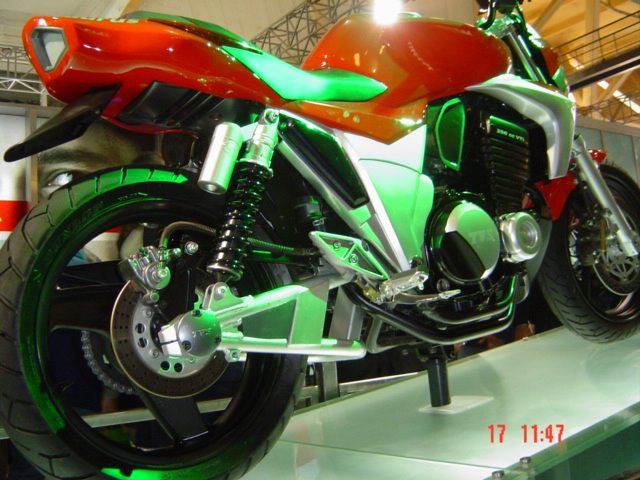
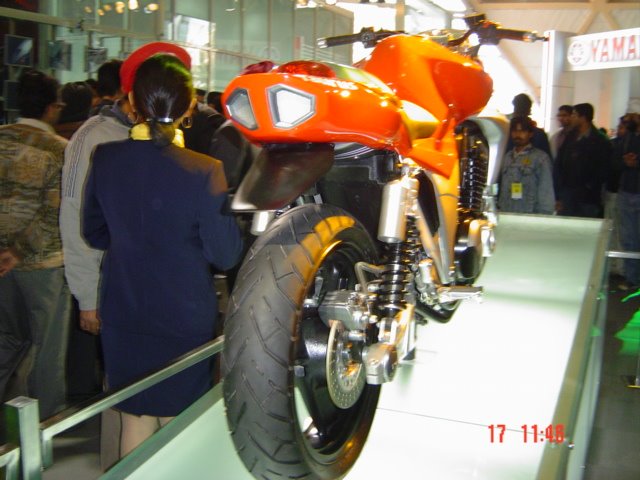
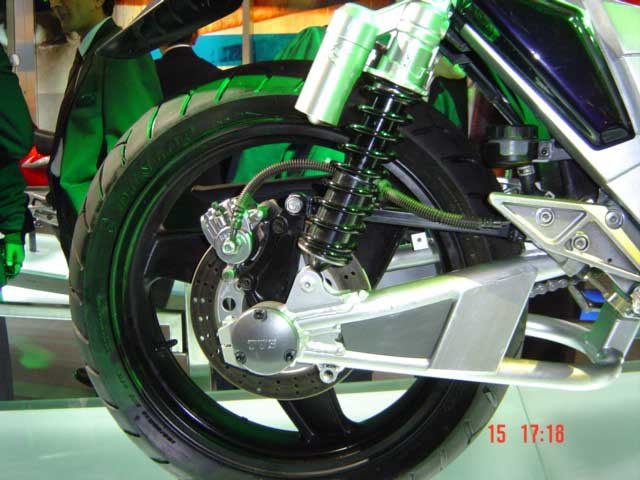
TVS Taurus Fiero F3 about to hit the road soon

TVS Taurus Fiero F3 about to hit the road soon.


Well this could be the answer to bajaj automobiles' Pulsar's 250cc by TVS - TVS Taurus the new 250cc bike from TVS says its a never ending competition.

250cc Engine (Again single cylinder though) is what powers it. The main attraction is disc brake for the real wheel as well.... cool (Pulsar 250cc is being outdated there even before the launch !!).

Price........ little costly compared to Pulsar 250cc .. It could come somewhere around 1.30 L .

Hope this bike captures the indian roads soon.

Discuss more about this bike in India Forums.

Just had a glance of few snaps of taurus.. Looks really sturdy